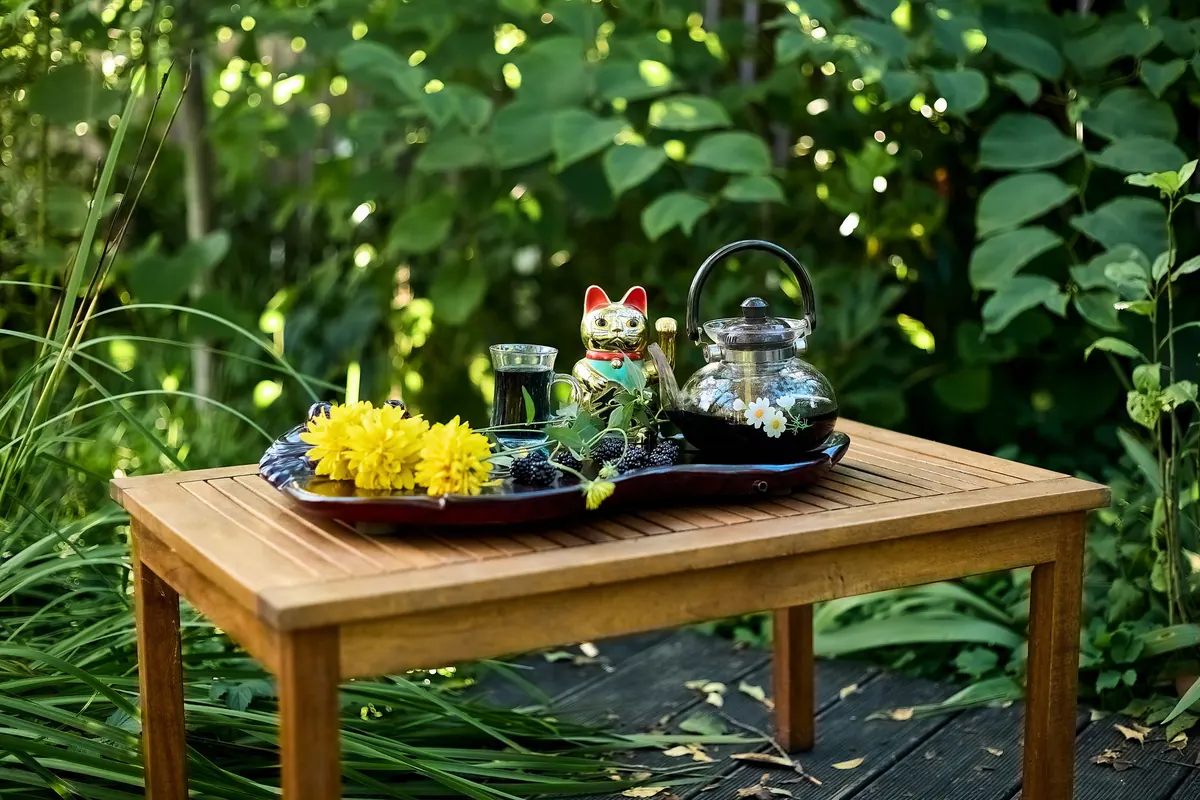
There's a moment in early summer when a full afternoon tea — three tiers, warm scones, a pot of strong Assam — starts to feel like too much. The fix isn't to abandon the ritual. It's to shift it: lighter leaves, cooler brewing, and a plate of things that taste like they were picked that morning.
Summer tea is its own pleasure, and done well it's the most refreshing meal of the week. A glass of jasmine cold brew sweating on the table. Cucumber sandwiches that actually crunch. Raspberries, cream, and a fork. Here's how to put one together at home, or order it well when you're out.
Start With Teas That Suit the Season
Heat flattens aromatics. A tea that tastes thrilling in November — malty, brisk, built for milk — can feel heavy and dull when it's 85 degrees outside. Lean toward leaves with lift: floral, grassy, citrusy, or lightly roasted. Steep them a little shorter and a little cooler than you normally would, because a bitter cup is even less appealing when you're warm.
A shortlist of summer leaves
- First flush Darjeeling. Pale gold, muscatel, almost grape-like. Steep three minutes at most.
- White peony or silver needle. Delicate and honeyed, and forgiving if you forget the timer.
- Jasmine green or sencha. Brew green tea at around 160–175°F. Boiling water turns it sharp.
- Light oolong such as baozhong or a green-style tieguanyin — creamy, floral, excellent iced.
- Ceylon or Nilgiri when you want a black tea that stays crisp over ice.
- Tisanes and herbals: lemon verbena, peppermint, hibiscus, rooibos, chamomile. All naturally caffeine-free, which matters if you're drinking tea at four o'clock and sleeping at eleven.
One pot per tea, always. Blending a smoky lapsang into the same pot as a jasmine green is how a good tea table goes wrong.
Cold Brewing at Home: A Method That Works
Cold brewing extracts sweetness and aroma without the tannic bite that comes from hot water, which is exactly why it suits summer. It also can't be rushed. Start the night before.
- Measure generously. Use roughly 1½ tablespoons of loose leaf per 2 cups (500 ml) of cold, filtered water — a bit more than you'd use hot, since cold water extracts more slowly.
- Combine in a jar or a pitcher with a lid, stir once, and refrigerate for 8 to 12 hours. Green and white teas are ready nearer 6 to 8; black teas and oolong can go the full 12.
- Strain well. Pour through a fine sieve, then through a paper filter if you want a completely clear glass. Discard the leaves.
- Chill again and drink within three days.
- Freeze the leftovers into ice cubes. This is the single best trick for iced tea: ice that melts into more tea instead of watering it down.
Add flavor after brewing, not during, so nothing turns bitter or soft. A few slices of cucumber in a green tea, a sprig of basil in white peony, a strip of orange peel in Ceylon, or halved peaches in a hibiscus brew — give them the last two hours in the fridge, then strain them out. Serve in glasses, not teacups, with a long spoon and no sugar unless someone asks.
Savory Bites That Stay Fresh in the Heat
Butter, cream cheese, and mayonnaise are all fine in a summer tea as long as everything stays cold until the moment it's served. What you want to avoid is a tray of sandwiches that has been sitting in the sun since two o'clock. Assemble close to serving time, keep the tray in the fridge, and wrap the sandwiches in a barely damp tea towel so the bread doesn't dry at the edges.
Thin slices are the whole point. Cut the crusts if you like the classic look, or leave them on for a homier plate. Good fillings for warm weather:
- Cucumber with salted butter, a whisper of dill, and a crack of black pepper.
- Radish slices with butter and flaky salt — sharp, pink-edged, and very good with green tea.
- Smoked salmon with dill crème fraîche and a squeeze of lemon.
- Chicken salad with tarragon and halved grapes, kept light on the mayonnaise.
- Tomato and basil on olive-oil-brushed bread, salted just before serving.
If you want a fourth savory course, think cold: a small glass of chilled pea and mint soup, a gazpacho shooter, or a little cup of watercress and orange salad. They cost you nothing in oven time and they look generous.
Scones, Cream, and Fruit-Forward Sweets
Keep the scones — tea isn't tea without them — but change what goes alongside. Instead of heavy chocolate or buttercream, let stone fruit and berries do the work.
Pair plain or almond scones with lemon curd, peach jam, or raspberry preserves, and serve clotted cream in a small bowl set over a bed of ice so it stays firm. For the sweets course, anything chilled and spoonable is your friend: lemon posset, buttermilk panna cotta with macerated berries, Eton mess with strawberries, or a simple berry tart with a thin glaze. Lemon verbena shortbread keeps well and tastes like the garden. A granita of melon or mint makes a lovely, almost weightless finish, and it can be made two days ahead.
If you're serving cheese, go fresh and mild — a soft goat cheese with honey, or ricotta with herbs and olive oil — rather than aged and warming on the plate.
Setting the Table for Warm Weather
Timing matters more than anything. Book or plan your tea for late afternoon, around four, when the worst of the heat has passed and the light goes soft. Shade is not optional: a porch, a tree, an umbrella. Bees and wasps are part of outdoor eating, so cover the sweets with mesh domes and keep a small dish of water away from the table to draw them off.
Pre-chill your teapots and glasses with cold water before you use them, and use an insulated carafe for the hot tea so you're not boiling a fresh kettle every twenty minutes. Set out a small cooler with ice packs for cream, milk, and anything with mayonnaise in it. And put everything on the table at once if you can — a summer tea is more relaxed as a single generous spread than as three formal courses carried out and back.
A Summer Tea Menu to Start From
If you'd rather not build the whole thing from scratch, this combination covers cool, crisp, and sweet without any last-minute scrambling. Brew the cold tea the night before; make the panna cotta and the shortbread a day ahead; assemble sandwiches half an hour before everyone sits down.
- To drink: jasmine green cold brew in glasses, plus a pot of first flush Darjeeling for anyone who wants it hot.
- Savory: cucumber and dill, radish with butter, smoked salmon with crème fraîche.
- Bread course: almond scones with lemon curd, peach jam, and chilled clotted cream.
- Sweet: buttermilk panna cotta with raspberries; lemon verbena shortbread.
Scale it up or down as your table demands, but keep the principle: cold where it should be cold, light where it can be light, and a glass of something brewed slowly the night before. That's a summer afternoon tea worth sitting still for.
Photo: Hans Anders / Pexels