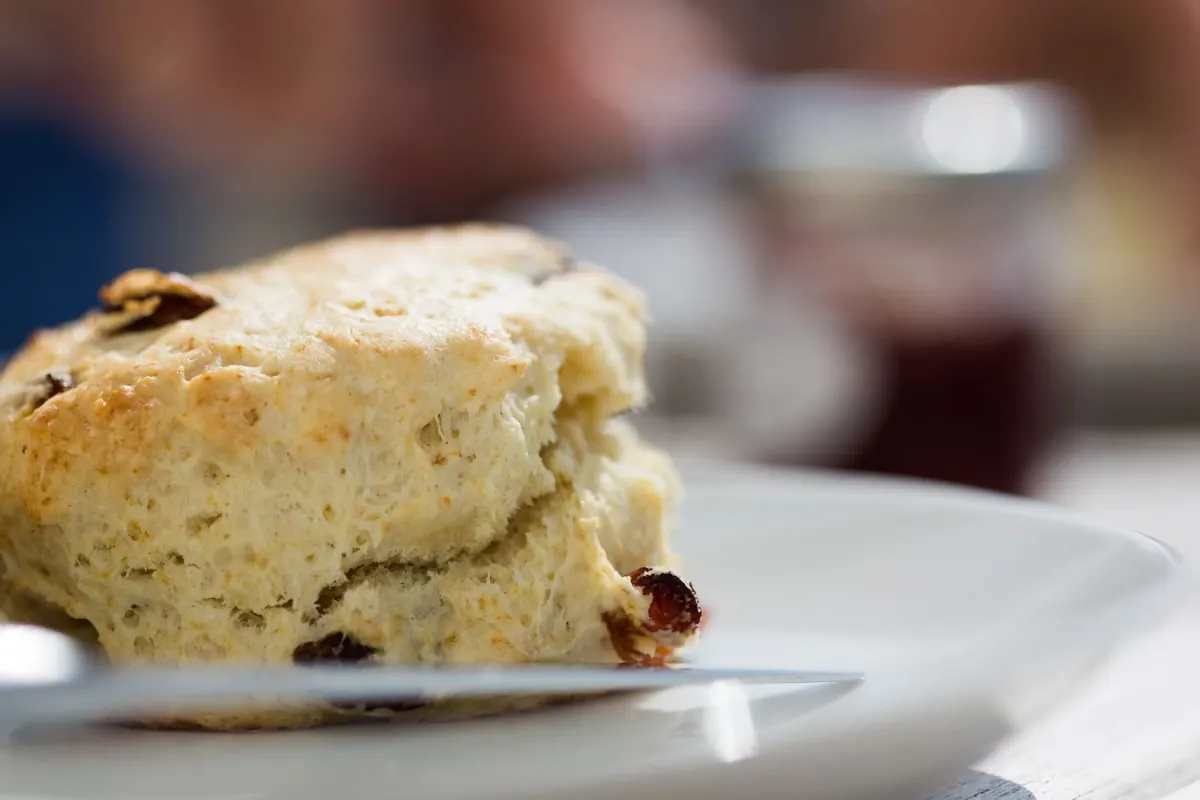
A scone is a scone until you set two of them side by side. One breaks into buttery shards and holds its shape under a heap of clotted cream. The other gives way like a soft, close-grained cake and melts almost before you finish the first bite. Both are called classic, both appear on afternoon tea stands, and both can be genuinely good. They simply ask different things of the baker, and they behave differently once the pot is poured. Here is how the two most common styles compare, and how to decide which one earns a place on your table.
Two Recipes, Two Very Different Habits of Dough
A classic scone begins with cold butter cut into flour, then milk or buttermilk to bring it together. Fat and liquid arrive separately, so the dough keeps a certain structure. You can see and taste the butter in it, and that structure is what gives the finished scone its flaky, layered character.
A cream scone does away with the butter entirely. Heavy cream supplies both the fat and the liquid, so you stir the dough together and it is more or less assembled. There is less to mix and fewer chances to go wrong. The trade is a softer, shorter crumb and a slightly sweeter impression, even with the same amount of sugar in the bowl.
Both styles rely on baking powder for lift, often with a pinch of baking soda when buttermilk is involved. Both want a hot oven and a light hand. The real differences show up in texture, richness and handling.
Texture: Flaky Layers vs. Short, Tender Crumb
Classic scones are meant to shard. When you break one open, you should see rough, uneven layers and a crust that crackles slightly. The crumb is a touch drier than you might expect on its own, which is exactly the point: it can carry thick jam and a generous spoonful of clotted cream without collapsing into paste.
Cream scones are tender rather than flaky. Because so much fat is already blended into the dough, the crumb is fine and even, closer to a good biscuit or a rich shortcake. They break cleanly and eat beautifully plain, with only butter or a thin layer of lemon curd. They do not have the same structural swagger. Pile them too high with toppings and they will slump politely on the plate.
Handling is what separates a decent scone from a tough one, and the two doughs need slightly different treatment.
Richness and the Role of Fat
In a classic scone, butter sits in small, cold pieces throughout the dough. During baking, those pieces melt and release steam, pushing the layers apart. The butteriness arrives in pockets and patches, which is why a warm classic scone can taste almost savoury next to sweet jam.
In a cream scone, the fat is already emulsified. Richness is uniform from crust to centre, rounder and gentler, with less contrast. Neither is better; they are simply different pleasures.
Two details worth getting right
First, salt. Both doughs need more than you think, roughly a quarter to a half teaspoon of fine salt for every 250 grams of flour. Without it, the richness tastes flat. Second, sugar. A tablespoon or two is enough for a tea scone. More than that and you are baking cake, which is fine, but it is no longer the thing that pairs with clotted cream.
If you plan to serve clotted cream, remember that it is already intensely rich. A classic scone is the better foil for it. A cream scone on top of clotted cream can tip into heaviness.
Handling: Where Most Scones Are Lost
Neither style rewards fussing. The following sequence works for both, with the noted adjustment for cream scones.
- Start cold. Chill the butter in the freezer for fifteen minutes and use cream or buttermilk straight from the fridge. Warm ingredients mean flat scones.
- Combine the dry ingredients first. Whisk flour, baking powder, salt and sugar so the leavening is evenly distributed.
- Add the fat. For classic scones, rub or cut the cold butter in until the pieces are the size of small peas, with a few larger flakes left for flakiness. For cream scones, pour in the cream and stir with a fork just until a shaggy, slightly sticky mass forms.
- Bring the dough together gently. Press and fold rather than knead. Classic dough should be tacky but not sticky; cream dough will be wetter, so dust the bench lightly and use a bench scraper.
- Build layers, sparingly. Two or three folds for classic scones, one or two at most for cream scones. Pat to about two centimetres thick, no thinner.
- Cut straight down. A five-centimetre round cutter suits an afternoon tea stand. Press down firmly and lift without twisting, because a twisting motion seals the edges and stops the rise.
- Chill for fifteen minutes, then bake hot. Around 220°C (425°F) for twelve to sixteen minutes, until risen and golden. Brush the tops with cream or beaten egg before they go in.
Side by Side at a Glance
- Fat: cold butter plus milk or buttermilk, versus heavy cream alone.
- Texture: flaky and layered, versus tender and fine-grained.
- Flavour: buttery with contrast, versus uniformly rich and round.
- Handling: more steps, more reward, less forgiving of warm hands, versus simple, quick and beginner-friendly.
- Best with: thick jam and clotted cream, versus butter, curd or a light glaze.
- Keeps: both are best the day they are baked; cream scones turn heavy faster overnight.
Make-Ahead, Storage and Serving
Bake what you need and freeze the rest unbaked. Cut rounds freeze well on a tray, then transfer to a bag. Bake them from frozen, adding three or four minutes to the timer. This is the single most useful habit for hosting: fresh scones with almost no work on the day.
Baked scones are best within a few hours. To refresh them, warm at 160°C (325°F) for five to eight minutes. Do not refrigerate them; the cold dries them out faster than the bread bin will. Serve them split rather than sliced clean through, pulling the two halves apart at the natural seam with your fingers or a fork, which keeps the crumb from compressing.
Bring jam and clotted cream to room temperature before serving. Whether jam or cream goes on first is a regional argument, not a rule, and either order tastes the same.
Choosing for Your Table
If you are serving a proper afternoon tea with clotted cream, thick preserves and a pot of strong Assam, bake classic scones. The flaky crumb stands up to the toppings and looks the part on a tiered stand. If you are hosting something lighter, baking for the first time, or feeding people who prefer tenderness over drama, cream scones will treat you kindly and come together in a single bowl.
One batch of each is not a bad experiment, either. Bake the classic recipe first, take notes on your flour, dough thickness and oven time, then try the cream version with the same flour. Note which one your guests reach for twice, and let that decide. Both recipes improve with practice, and neither is difficult once you know what you are aiming for: cold ingredients, a light hand, a hot oven and no twisting at the cutter.
Photo: Torsten Dettlaff / Pexels