Somewhere between a plate of sandwiches and a proper occasion sits the three-tier stand. It is a piece of equipment, but it is also a small piece of choreography: three plates, one handle, and a fixed order that tells your guests where to begin. Get the order right and the table relaxes. Get it wrong, with sweets hovering above the scones and sandwiches stranded at the top, and people hesitate, unsure whether to reach or wait.
The traditional arrangement is not a mystery, and it is not fussiness for its own sake. It is a sequence built around appetite and weight. Here is how to build a stand that looks generous, stays balanced, and gets eaten in the right order.
The Traditional Order, and Why It Exists
Three tiers, three jobs. Finger sandwiches go on the bottom plate. Scones, with their jam and cream, go in the middle. Small sweets and pastries crown the top. That is the whole rule, and everything else is variation.
Two reasons support it. The first is the palate: a savoury beginning wakes up the appetite, scones sit at the sweet-savoury hinge of the meal, and the sugar comes last when it can be enjoyed rather than endured. The second reason is physical. The bottom plate is almost always the widest, so it carries the heaviest, most numerous items. Sending the sandwiches upstairs would mean a top-heavy stand and a nervous walk from the kitchen.
The Bottom Tier: Finger Sandwiches
This is the tier that does the most work, and it should look like plenty without looking crowded. Trim the crusts from thinly sliced white and brown bread, butter it properly to the edges, and cut each sandwich into neat fingers or small triangles. A serrated knife and a gentle sawing motion will keep the layers intact; pressing down will squash the filling out the sides.
Three or four varieties is enough
- Cucumber with salted butter, sliced paper-thin and patted dry first
- Smoked salmon with a scrape of cream cheese or dill butter
- Egg mayonnaise with a few cress leaves
- Ham with a little mustard, or chicken with tarragon
Arrange them in rows, alternating brown and white so the plate reads as a pattern rather than a pile. If the plate is round, work in concentric rings. Stand them upright on their cut edges where the filling holds its shape, or lay them flat and shingle them. Aim for eight to twelve pieces per person across the whole stand, and never let the sandwiches touch the rim.
The Middle Tier: Scones and Their Companions
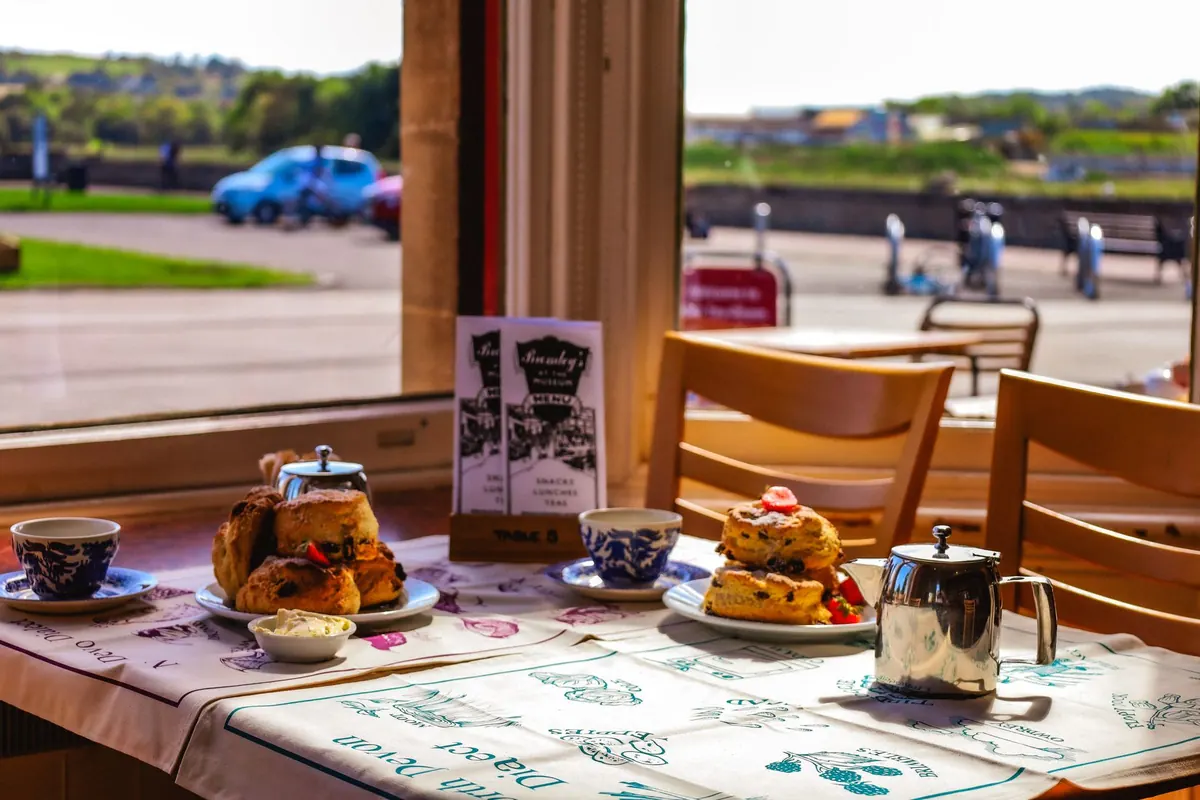
Scones belong in the middle because they are the bridge between savoury and sweet, and because they need room. Four to six scones is right for a stand serving two or three people. Plain or with sultanas, split horizontally, not cut through all the way, and kept wrapped in a clean tea towel until the last moment so they arrive warm and soft rather than cold and crumbly.
You have a decision to make about the accompaniments. Small pots of jam and clotted cream set directly on the middle plate look tidy and travel well. A separate dish passed at the table is kinder to the stand and easier to refill. Whichever you choose, give each guest their own small knife; a communal one leads to awkward hovering.
Cream first or jam first?
This is a matter of regional custom, not correctness, and both camps will tell you the other is wrong. Devon traditionally puts cream on first, Cornwall jam first. Whichever you serve, mention it lightly and move on. The scone is the point.
The Top Tier: Small Sweets
The top tier is where the stand earns its reputation, and it is the easiest place to overdo things. Choose five to seven small pieces per person, and keep them genuinely small: fruit tartlets, miniature éclairs, a square of lemon drizzle, a chocolate-dipped strawberry, a macaron or two. Anything that needs a fork or a plate of its own belongs elsewhere.
Think in colour, not quantity
A little pink, a little dark chocolate, a pale cream, something green from a mint leaf or a sliver of pistachio. Height helps. A tartlet standing on its pastry case reads better than the same tartlet lying flat. Build the top tier in a loose circle, leaving a small gap in the centre so the arrangement breathes.
Building the Stand, Step by Step
- Check the stand first. Set it on a level surface and give it a gentle nudge. A wobble is worse than any missing item.
- Line each plate with a paper doily or a small linen napkin. A tiny dab of jam or butter underneath stops the liner sliding.
- Load the bottom tier first, then the middle, then the top. Working upwards keeps the stand stable while your hands are busy.
- Place the heaviest items nearest the central handle and lighter pieces towards the rim.
- Keep a consistent pattern on each plate: rows, rings, or clock positions. Order looks like abundance.
- Finish the top tier last with a dusting of icing sugar, a few mint leaves, or an edible flower or two.
- Wipe the rims, the handle, and any fingerprints before the stand leaves the kitchen.
Carrying and Serving It
Carry the stand with both hands at the base plate, not by the handle. The handle is for lifting the tiers when you need access, and it is the quickest way to tip a loaded stand sideways.
Set it in the centre of the table, announce nothing, and let guests work from the bottom up. If you are refilling, lift off the whole tier rather than reaching between plates. Sandwiches that have been sitting out can be replaced; scones are best brought fresh from the oven in two batches, one at the start and one about twenty minutes later.
The Day-Of Checklist
Assemble in this order: sandwiches made and chilled under a damp cloth, scones baked and wrapped, sweets arranged on a tray in the fridge, stand polished and lined. Fifteen minutes before serving, load the bottom tier, then the middle, then the top, and leave the stand somewhere cool and out of the sun. Handle everything with a light touch and don't fuss once it is set down.
A three-tier stand is not complicated. It is a simple statement of sequence: savoury, then warm and buttery, then sweet. Build it in that spirit and it will do the work for you.
Photo: arjan carja / Pexels