Every casino game is built on the same uncomfortable truth: the house wins in the long run. But the size of that edge varies wildly depending on what you play and how you play it. A smart blackjack player can face a house edge of 0.5%, while a slots player might be staring down 8% or worse. That gap is the difference between entertainment and a slow bleed. Let's break down what's actually happening under the hood of the games you love.
The House Edge Isn't a Rumor—It's Math
Casinos don't need to rig games. They don't need to cheat. The math does all the work. Every wager you place has a built-in mathematical disadvantage, and over thousands of hands or spins, that disadvantage compounds into reliable profit for the house.
Take American roulette. 38 numbers, but the payout on a single number is 35-to-1. If you bet $1 on every number, you'd wagered $38 but only collect $36 (your $35 profit plus your original $1 back). That missing $2 is the house edge: 5.26%. European roulette removes one zero, dropping the edge to 2.7%. Same game, different math, very different long-term outcome.
The key metric here is expected value (EV). It's not about what happens in one session. It's about what happens over 10,000 sessions. The math doesn't care about your gut feeling or that hot streak you had last Tuesday.
Slots: The Highest Edge, The Highest Entertainment
Slots are the cash cow of the casino floor, often generating 70-80% of revenue in many jurisdictions. And there's a reason: the house edge is brutal compared to other games. A good place to continue is dana slot.
Modern video slots typically carry RTP (Return to Player) percentages between 92% and 97%. That sounds decent until you realize it means the house keeps 3-8% of every dollar wagered. On a machine with 94% RTP, you're losing $6 for every $100 cycled through. If you're spinning $2 per spin and doing 600 spins an hour, that's $1,200 wagered per hour—and an expected loss of $72. That adds up fast.
Here's what actually matters when picking slots:
- RTP (Return to Player): Look for 96% or higher. Online casinos often publish this; land-based machines rarely do, but regulations sometimes require it.
- Volatility: High-volatility slots pay rarely but huge. Low-volatility slots pay often but small. Match this to your bankroll and tolerance for swings.
- Max bet vs. bankroll: Never bet more than 1-2% of your total bankroll per spin if you want to survive variance.
Here's a trap: progressive jackpots. Those massive prizes come from a percentage of every bet, and that percentage often increases the house edge significantly. If the jackpot is $1 million, the odds of hitting it might be 1 in 10 million. The dream is real, but the math is not in your favor.
Blackjack: Where Skill Actually Matters
Blackjack is the one game where your decisions change the house edge. Play badly, and you're giving the casino 2-3%. Play basic strategy perfectly, and you can cut that to 0.5% or lower, depending on the rule variations.
Basic strategy is a mathematically derived chart that tells you exactly what to do in every situation. Should you hit a 16 against a dealer's 7? No. Should you double down on 11 against a dealer's 6? Yes. These aren't opinions—they're the results of millions of simulated hands.
But here's the catch: casinos don't offer the same rules everywhere.
- Dealer hits on soft 17 increases the house edge by about 0.2%.
- Blackjack pays 6-to-5 instead of 3-to-2 increases the house edge by 1.4%. That's massive. Avoid these tables.
- No doubling after splitting costs you about 0.15%.
- Re-splitting aces allowed helps you slightly.
Card counting still works in theory. But modern casinos use multiple decks, frequent shuffling, and continuous shuffling machines to neutralize it. Unless you're playing single or double-deck games with deep penetration, you're likely wasting your time. And if you get caught, you'll be asked to leave—legally, they can do that.
Poker: The Only Game You Play Against Other Players
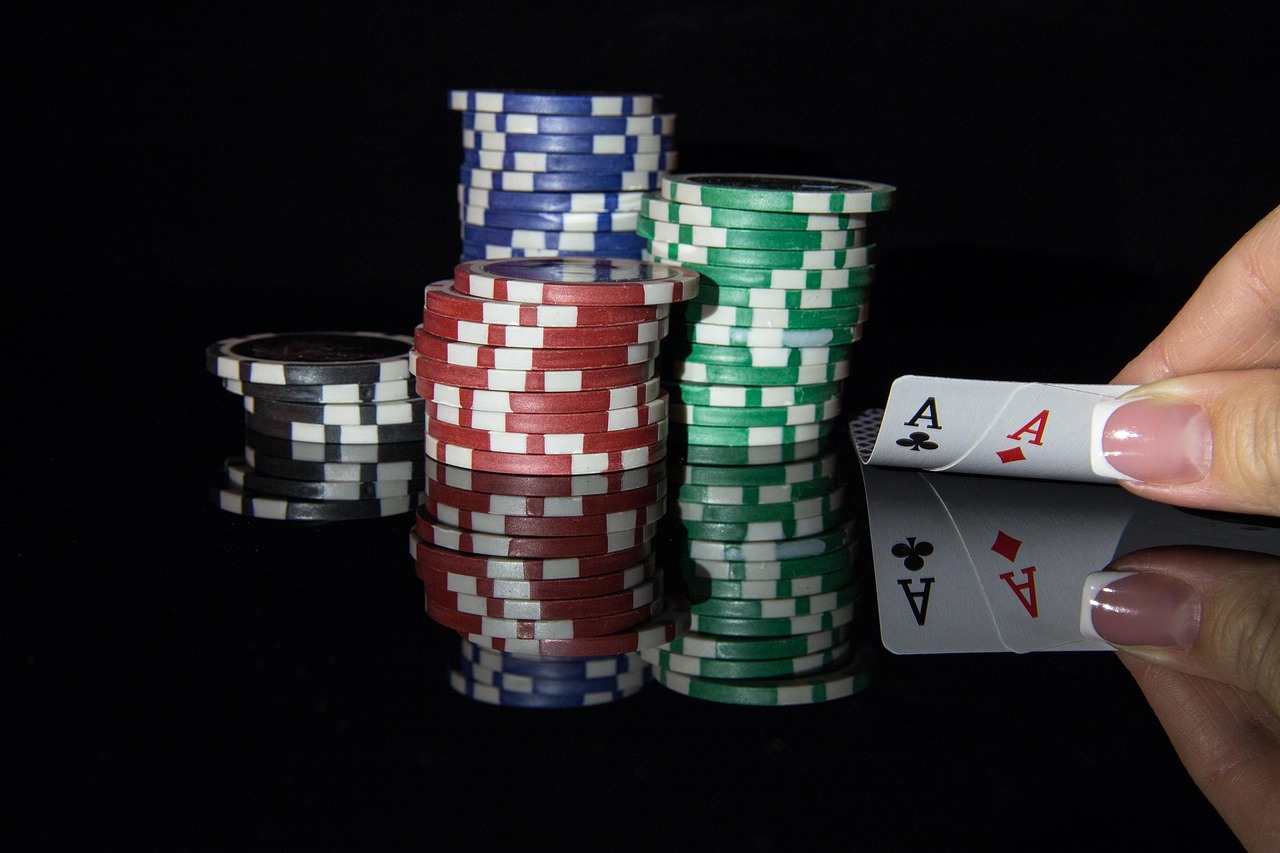
Poker is fundamentally different. You're not playing against the house—you're competing against other players, and the house takes a rake (a small percentage of each pot). This means a skilled player can actually have a positive expected value.
The rake typically ranges from 2.5% to 10% of the pot, capped at a certain amount (often $3 to $5 in live games). In online micro-stakes games, the rake can be brutal—sometimes effectively 5-10% of your winnings. At higher stakes, the rake is proportionally smaller, which is why pros gravitate to bigger games.
What separates winning players from losing ones?
- Position awareness: Acting last gives you more information. It's the single most important concept in poker.
- Bankroll management: You need 20-30 buy-ins for cash games, 50-100 for tournaments. Anything less and variance will destroy you.
- Emotional control: Tilt is the biggest leak for most players. Recognizing when you're playing badly is a skill.
- Game selection: The softest games are where you make the most money. Swallow your ego and play against weaker opponents.
Unlike slots or blackjack, poker is a zero-sum game among players before the rake. If you're better than your opponents, you profit. If you're worse, you lose. There's no house edge to overcome—just the rake and your own mistakes.
Betting: Sportsbooks and the Margin
Sports betting operates on a different principle. The house doesn't set odds to reflect true probability; they set odds to balance action and guarantee a profit. That's the vigorish, or "vig."
A standard point spread bet is -110 on both sides. You risk $110 to win $100. If the book takes equal action on both sides, they pay out $100 to half the bettors and keep $110 from the other half. Their profit is the $10 difference per pair of bets, which is about 4.5% of total handle. That's the margin.
Sharp bettors look for lines that are mispriced. If a book offers -105 instead of -110, that's a better deal. If they offer +100 on a coin-flip situation, that's value. Over time, finding these edges is how professionals survive. But for recreational bettors, the vig ensures the house wins regardless of the outcome.
Live betting and prop bets often have even higher margins—sometimes 8-10% or more. The more exotic the bet, the worse the value.
The Bottom Line
If you want the best odds, play blackjack with favorable rules and learn basic strategy. If you want the biggest potential payouts, play poker against weak opponents. If you want pure entertainment with no illusions, slots deliver exactly that—just set a budget and stick to it.
The smartest gamblers aren't the ones who win big once. They're the ones who understand the math, manage their bankroll, and treat the house edge as the cost of entertainment. Because that's what it is. The casino isn't your enemy—it's a business selling you a night of excitement. Know the price before you buy.